| Product | Rating | Price |
|---|---|---|
 1. Milwaukee M18 FUEL 2904-20 Hammer Drill/Driver (Tool Only) Milwaukee Best Overall 1. Milwaukee M18 FUEL 2904-20 Hammer Drill/Driver (Tool Only) Milwaukee Best Overall | Check Price | |
 2. DEWALT FLEXVOLT ADVANTAGE Hammer Drill (DCD999B) DEWALT Best High-Performance 2. DEWALT FLEXVOLT ADVANTAGE Hammer Drill (DCD999B) DEWALT Best High-Performance | Check Price | |
| 3. DEWALT 20V MAX XR Hammer Drill Driver (DCD996B) DEWALT Best Value 20V MAX | Check Price | |
 4. Makita XPH12T 18V LXT Compact Hammer Drill Kit Makita Best Compact Hammer Drill 4. Makita XPH12T 18V LXT Compact Hammer Drill Kit Makita Best Compact Hammer Drill | Check Price |
Detailed Reviews
Milwaukee
1. Milwaukee M18 FUEL 2904-20 Hammer Drill/Driver (Tool Only)
Pros
- 1,400 in-lbs of torque handles lag screws, deep concrete anchors, and demanding masonry without bogging
- 1/2" all-metal chuck with carbide teeth grips standard masonry bits firmly under sustained hammer load
- Hammer mode for concrete, brick, block, and masonry — 2-speed transmission lets you match pace to material
Cons
- Sold tool only — M18 battery and charger are purchased separately
- The internal hammer mechanism adds bulk and weight compared to a standard drill/driver on the same platform
The 2904-20 brings 1,400 in-lbs of brushless FUEL torque and an all-metal 1/2" chuck to concrete anchor work, brick, and block. Existing M18 owners can add it without new hardware; newcomers to the platform will need to budget for a battery and charger alongside the tool.
DEWALT
2. DEWALT FLEXVOLT ADVANTAGE Hammer Drill (DCD999B)
Pros
- FLEXVOLT ADVANTAGE lets the tool draw increased power from a FLEXVOLT battery while staying fully compatible with every 20V MAX pack you already own
- 1/2-inch keyless chuck accommodates the full range of standard masonry bits and anchor-setter shanks
- Brushless motor extends runtime and reduces maintenance compared to brushed models at this voltage
Cons
- Sold tool-only — a FLEXVOLT or 20V MAX battery and charger must be sourced separately to use it
- Larger head profile than a compact drill/driver; drilling in confined stud bays requires more repositioning
The DCD999B is the logical heavy-duty upgrade for anyone already running DEWALT 20V MAX batteries. The FLEXVOLT ADVANTAGE means swapping to a higher-capacity FLEXVOLT pack unlocks more output from the same tool body — useful when drilling through reinforced block or driving large-diameter anchors repeatedly. A strong pick if you want headroom beyond standard 20V performance without switching platforms.
DEWALT
3. DEWALT 20V MAX XR Hammer Drill Driver (DCD996B)
Pros
- Three-speed transmission gives you a dedicated setting for concrete anchor work, driving, and precision tasks without spinning through the clutch manually
- Brushless XR motor delivers reliable output on demanding masonry tasks across the 20V MAX battery line
- 1/2-inch chuck fits all standard masonry bits and is compatible with the wide 20V MAX accessory ecosystem
Cons
- Tool-only listing — you need a 20V MAX battery and charger already or purchase them separately
- Heavier than a compact 20V drill/driver, so extended single-handed work above shoulder height becomes tiring
The DCD996B gives experienced DEWALT users a dedicated three-speed brushless hammer drill without the FLEXVOLT premium. The 3-speed setup means you can lock into the right power band for a specific task — slow for heavy anchor driving, faster for general drilling — rather than riding the variable trigger the whole time. A solid choice for tradespeople already deep in the 20V MAX system.
Makita
4. Makita XPH12T 18V LXT Compact Hammer Drill Kit
Pros
- Compact body is noticeably lighter and shorter than full-size 18V hammer drills, reducing fatigue on overhead and single-handed masonry work
- Brushless 18V LXT motor runs cooler and longer between charges than a comparable brushed model
- Hammer driver-drill mode handles standard concrete anchor installation in block and brick without needing a separate tool
Cons
- Kit includes compact 2.0Ah batteries; runtime is shorter than a full-size kit with larger capacity packs
- Makita's LXT platform is separate from Milwaukee M18 and DEWALT 20V MAX — batteries and chargers are not interchangeable
The XPH12T makes the most sense for finish carpenters, trim crews, and DIYers who need a hammer drill for occasional masonry but spend most of their time on lighter work in tight spaces. The compact frame pays off in overhead joist bays, cabinet interiors, and anywhere a full-size drill becomes a two-handed liability. The 18V LXT brushless motor delivers capable hammer drive performance in a noticeably smaller package.
How We Picked
We focused specifically on standard hammer drills — tools with a 1/2-inch keyless chuck and an integrated percussion mechanism — rather than SDS-Plus rotary hammers, which serve a different and more specialized purpose. Our evaluation started with manufacturer specifications: torque ratings, motor type, battery voltage, and whether the drill ships as a kit or tool-only. These details determine real-world capability differences more reliably than marketing language.
We cross-referenced independent reviews from professional trades publications and verified owner feedback from confirmed purchasers who use these tools for concrete anchor installation, brick drilling, and light masonry work. Battery platform compatibility weighed heavily in the rankings: buyers who already own M18 or 20V MAX packs get meaningfully more value from a tool-only pick, while first-time platform buyers benefit most from kits that include hardware. For the tools from our full cordless drill roundup, we refined the selection to drills with verified hammer mode capability and concrete-relevant specs.
Buying Guide
Hammer Drill vs SDS-Plus Rotary Hammer
These two categories are often confused in store listings but serve different jobs. A hammer drill uses a standard 1/2-inch keyless chuck — the same kind of chuck on any cordless drill — and adds a rapid percussion action that helps the bit chew through concrete. All four picks here are hammer drills. They are appropriate for installing concrete sleeve anchors, drilling through brick for conduit, and most residential masonry tasks.
An SDS-Plus rotary hammer uses a spline-drive chuck that accepts SDS-Plus bits only. The bit actually reciprocates separately from the rotation, delivering far more impact energy per stroke — designed for drilling large or deep holes in hard concrete, not occasional anchor work. If your job involves breaking up concrete or drilling multiple large-diameter holes in reinforced slab, an SDS-Plus is the more efficient choice. For most homeowners and light commercial work, a quality hammer drill handles the job.
Chuck Size and Bit Compatibility
All four drills use a standard 1/2-inch keyless chuck that accepts the masonry bits and anchor-setter shanks you will find at any hardware store. The Milwaukee 2904-20 uses an all-metal chuck with carbide teeth, which bites down harder on smooth round shanks under load — an advantage when driving large concrete anchors that put significant torque on the bit. Keyless chucks on the DEWALT and Makita picks are also compatible with the full range of standard masonry bits, so you are not locked into proprietary accessories.
Torque and Speed Settings
Torque determines how deep and how fast the drill will advance through hard material. The Milwaukee 2904-20 delivers 1,400 in-lbs, which handles everything from driving lag screws to setting large concrete anchors. The DCD996B’s three-speed transmission lets you select a gear matched to the task — lower speed delivers more torque for heavy driving while higher speed suits faster drilling through softer material. Variable speed triggers on all four picks let you start a bit slowly in concrete before bringing up RPM, which reduces walking and chipping.
Battery Platform and Kit Contents
The Makita XPH12T ships as a complete kit with batteries and a charger, so first-time Makita buyers can start immediately. The Milwaukee 2904-20, DEWALT DCD999B, and DCD996B are all sold tool-only: the 2904-20 works with any M18 battery, the DCD999B accepts DEWALT 20V MAX and FLEXVOLT batteries, and the DCD996B works with any 20V MAX pack. If you already own several packs on a given platform, a tool-only pick avoids paying for redundant hardware. Starting fresh on any of these platforms means factoring in a battery and charger purchase alongside the tool.
Weight and Drilling Ergonomics
Hammer drills are heavier than standard drill/drivers because the internal percussion mechanism adds mass. The Makita XPH12T is the lightest option here due to its compact body and smaller battery, which matters most for overhead drilling and single-handed work through ceiling joists or elevated masonry. The Milwaukee 2904-20 and DEWALT models are full-size tools — substantial in hand but more stable on long masonry runs where a lighter tool might wander. Choose based on how much of your work is vertical versus horizontal.
Drilling Concrete Safely
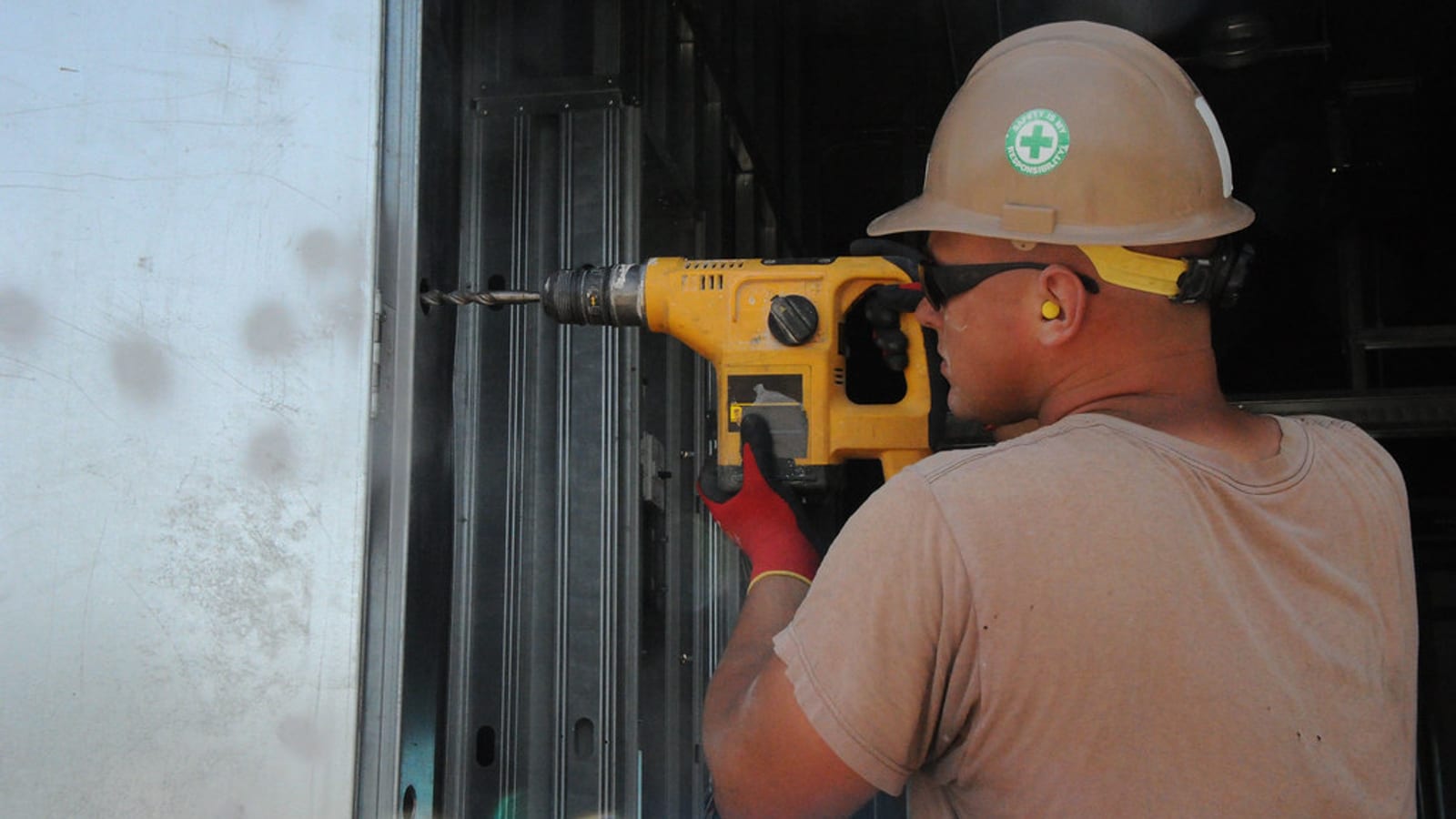
Concrete drilling generates hazards that ordinary wood or metal drilling does not. Wear safety glasses whenever the bit is turning — concrete chips and debris eject unpredictably, especially on porous block. Hearing protection is advisable for extended sessions, since the hammer mechanism adds measurable noise above a standard drill.
The more significant concern is silica dust. Concrete, brick, and mortar contain crystalline silica, and fine dust from drilling can pose respiratory risks with repeated exposure. For occasional anchor holes, working outdoors or in a well-ventilated space reduces risk substantially. For longer drilling sessions — particularly interior work or in enclosed spaces — consider a P100 half-mask respirator. Wet-drilling attachments are available for some masonry bits and suppress airborne dust effectively. Never use compressed air to blow dust off a work surface in an enclosed space.